

In 2026, accessing web data at scale is more challenging than ever. Advanced anti-bot systems, IP fingerprinting, and strict platform controls have made rotating proxies essential for businesses involved in web scraping, ad verification, SEO tracking, and market research.
Rotating proxies work by automatically changing IP addresses, helping users avoid blocks, bypass rate limits, and maintain high success rates across global websites.
However, proxy quality, rotation logic, and IP diversity vary significantly between providers, directly impacting performance and reliability.
This guide explores the best rotating proxy providers in 2026, highlights the key features to look for, and explains why Proxying is a strong choice for modern, data-driven operations.
What are Rotating Proxies?
Rotating proxies are intermediary servers that automatically switch a user’s IP address with each new request or at set intervals, sourced from a large pool of IPs.
They provide high anonymity, prevent rate limiting, and bypass IP bans by making traffic appear as if it originates from multiple, different users. They are essential for web scraping, SEO tracking, and data mining.
To get deeper insights, check our guide about rotating proxies.
How Rotating Proxies Work?
Rotating proxies automatically switch your IP address for each request or at set intervals using a large, shared pool of IP addresses. They work by routing traffic through a single server that changes IP for each request, allowing users to avoid detection, bypass IP bans, and scrape data anonymously.
Criteria for Ranking the Best Rotating Proxy Providers
To ensure a fair and practical comparison, we evaluated each provider across a set of key factors. These ranking ensures you choose a provider that meets both technical and business goals.
- IP Pool Size & Diversity
- Rotation Mechanics
- Geographic Coverage
- Speed & Performance
- Reliability & Uptime
- Anti-Detection & Security
- Ease of Use
- Integration
- Pricing
Comparison Table
| Provider | IP Pool Size / Type | Rotation Option | Best For | Pricing |
| Proxying | 5M+ Residential IPs, HTTP/SOCKS5 | Per request + sticky sessions | Web scraping, SEO, Automation | Free 2 GB trial, paid plans |
| ProxyFish | Mid-sized rotating proxy network (various IP types) | Per request/session | General scraping & automation | Competitive mid-range plans |
| Smartproxy | 115M Residential + 10M Mobile + Data center | Every request, up to 24h sticky | Scraping, GEO targeting | $3.5/GB residential |
| SOAX | 191M residential, mobile, ISP, DC | Per request, time-based sticky | Flexible targeting & configuration | Custom Plans |
| NetNut | 85M residential + ISP + data ceneter | Per request | Large-scale scraping & business use | Custom Plans |
Detailed Comparison of the Best 5 Rotating Proxy Providers
Proxying
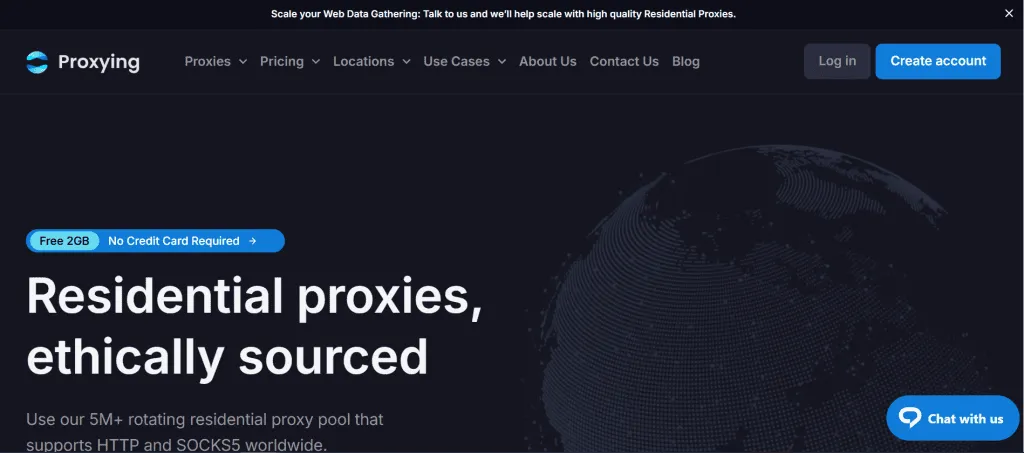
Proxying positions itself as a high-performance rotating proxy provider with a focus on reliability, flexibility, and global coverage. It’s designed for developers and businesses that need large-scale web access without interruptions.
Features
- Millions of residential IPs
- Per-request and sticky session rotation
- HTTP/SOCKS5 support
- Pay-as-you-go with free trial
- Geo-targeting across 70+ countries
Pros
- Large, diverse IP pool
- Flexible rotation options
- Fast and reliable performance
- Developer-friendly integration
Cons
- Enterprise plans may require contacting sales
Best For
- Web scraping at scale
- SEO monitoring
- Price intelligence and market research
- Ad verification and automation tasks
- Cybersecurity tasks
- Brand monitoring
- Gaming
ProxyFish
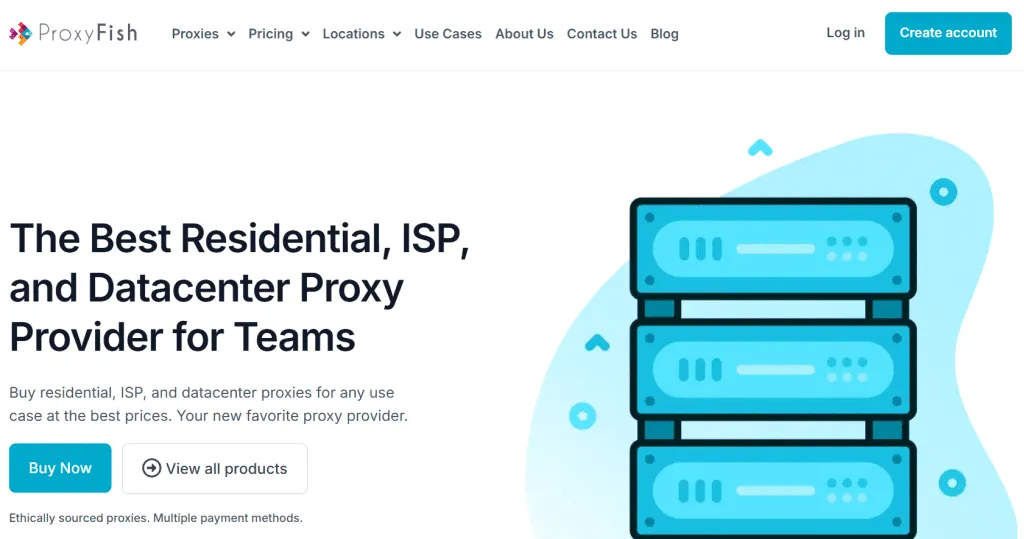
ProxyFish is a mid-sized rotating proxy provider focused on simplicity and affordability, making it a solid choice for small to medium scraping tasks.
Features
- Rotating residential and data center IPs
- Per-request and per-session rotation
- HTTP/SOCKS5 support
- Basic geo-targeting
Pros
- Easy to set up and use
- Cost-effective for medium-volume scraping
- Reliable performance for general automation
Cons
Limited advanced features
Best For
- Small to mid-sized businesses
- General web scraping and automation
- SEO and content monitoring
Smartproxy
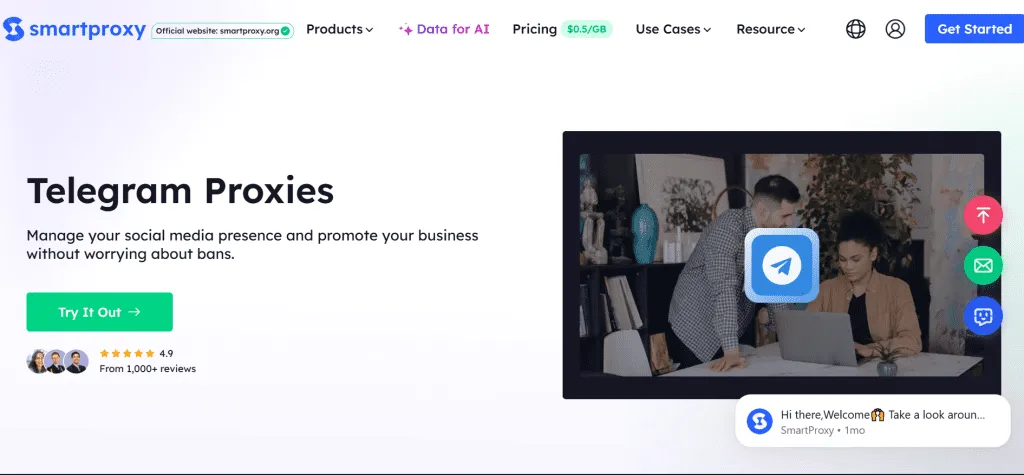
It offers a large residential and mobile IP network with strong geo-targeting capabilities, ideal for more advanced scraping and data collection projects.
Features
- 100M+ residential and 10M mobile IPs
- Flexible rotation per request and sticky sessions
- Geo-targeting by country
- API access for automation
Pros
- Massive IP pool
- Good global coverage
- Support high-volume scraping
Cons
- Slightly higher cost for large-scale use
- There is no learning for beginners
Best For
- Enterprise scraping
- Price monitoring and competitive intelligence
- Geo-specific data collection
SOAX
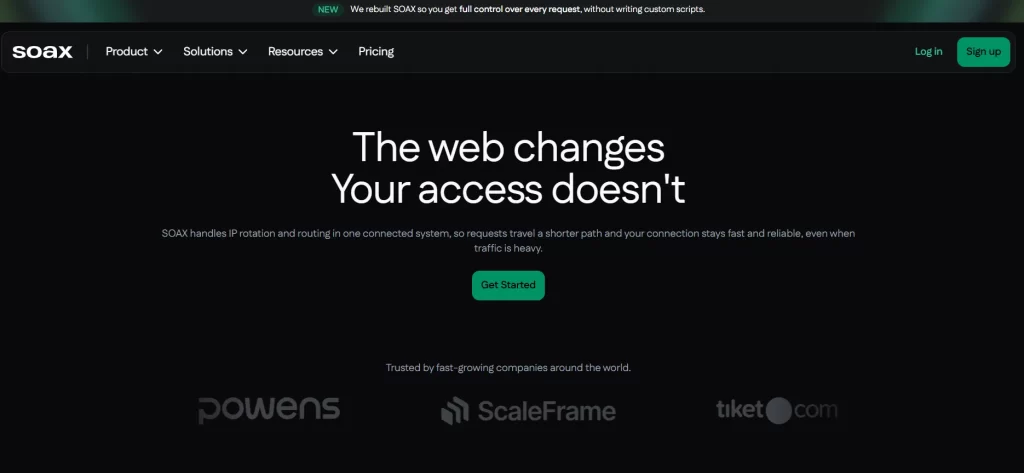
SOAX is a versatile proxy provider with a large residential IP network and configurable rotation options, focusing on flexibility and budget-friendly plans.
Features
- Per request, time-based, and sticky sessions.
- Advanced geo-targeting
- API for automation
Pros
- Huge IP pool with global coverage
- Flexible rotation options
- Affordable pricing for smaller projects
Cons
- Advanced features may require extra setup
- Performance varies by region
Best For
- Flexible scraping projects
- Repeated automation tasks
NetNut
NetNut provides a stable rotating proxy network consisting of residential, ISP, and data center IPs, optimized for high-volume scraping and business use.
Features
- Per-request rotation
- HTTP/SOCKS5 support
- Global IP coverage
Pros
- Reliable high-volume performance
- Supports enterprise-level scraping
- Fast speeds and low latency
Cons
- Fewer customization options
- Pricing is higher for smaller users
Best For
- Large-scale web scraping
- Market intelligence
- SEO and ad verification
Conclusion
Choosing the best rotating proxy provider ultimately depends on your scale, budget, and technical requirements. If you’re running occasional scraping tasks, a simpler provider may be enough. But for businesses that rely on continuous data collection, SEO tracking, ad verification, market research, or large-scale automation, factors like IP quality, rotation reliability, geographic coverage, and uptime become critical.
Proxying stands out as a strong choice for teams by combining performance, flexibility, and ease of use.