

Quick Read
Amazon and eBay actively block suspicious automated traffic, making proxies useful for scraping, price monitoring, and marketplace research. Residential proxies offer better trust, while rotating proxies help distribute high-volume requests. Static proxies work better for stable sessions and account management. This guide covers the best proxy types and how to use them effectively.
Online marketplaces such as Amazon and eBay have transformed the way people buy and sell products. Millions of listings, constant price changes, customer reviews, and product rankings make these platforms valuable sources of business intelligence. From sellers tracking competitors to developers building automation tools, many users rely on large-scale data collection and account management systems to operate efficiently.
However, both Amazon and eBay actively monitor traffic and enforce anti-bot protections. Repeated requests from a single IP address can quickly trigger rate limits, CAPTCHAs, temporary bans, or account restrictions. This is where proxies become essential.
Proxies allow users to distribute requests across multiple IP addresses, helping them browse anonymously, automate tasks safely, and collect data without exposing their original identity. Whether you are scraping product listings, monitoring prices, managing multiple seller accounts, or verifying localized search results, proxies can significantly improve reliability and performance.
In this guide, you’ll learn how proxies work with Amazon and eBay, which proxy types are best for each use case, and how to configure them effectively.
Why Amazon and eBay Block Repeated Requests
Amazon and eBay are designed primarily for human buyers, not automated systems. Their infrastructure continuously analyzes traffic patterns to detect suspicious behavior.
Some common triggers include:
- Sending too many requests in a short period
- Using the same IP address repeatedly
- Accessing pages with automated scripts
- Managing multiple accounts from one connection
- Repeatedly checking prices or listings
- Using outdated browser headers or fingerprints
Once suspicious activity is detected, the platforms may respond with:
- CAPTCHA challenges
- Temporary IP bans
- HTTP 403 or 429 errors
- Login verification prompts
- Account limitation
- Sessions invalidation
For businesses that rely on automation or large-scale monitoring, these restrictions can interrupt operation and reduce data accuracy. Using eBay proxies helps distribute traffic naturally, making requests appear as though they originate from different real users searching on eBay.
Common Use Cases for Amazon and eBay Proxies
Businesses and developers use proxies for a wide variety of marketplace-related tasks.
Price Monitoring
E-commerce sellers constantly monitor competitor prices to stay competitive in fast-moving marketplaces like Amazon and eBay. Since prices can change multiple times throughout the day, businesses often rely on automated tools to collect price information from thousands of price pages. Proxies make this possible by distributing requests across multiple IP addresses, helping users avoid rate limits and anti-bot restrictions while gathering accurate market data.
Product Data Scraping
Many companies scrape marketplace data to analyze product performance and consumer trends. This often includes collecting product titles, descriptions, ratings, reviews, seller information, stock availability, and shipping details. The collected data can be used for market research, inventory tracking, pricing analysis, and business intelligence. Proxies help maintain stable access during large-scale scraping operations by reducing the likelihood of detection and blocking.
Ad Verification
Businesses running advertisements on eBay or Amazon often need to verify how their ads appear in different regions and locations. Since marketplaces may display different sponsored products depending on the user’s country or city, proxies allow advertisers to simulate browsing from multiple geographic locations. This helps ensure campaigns are displayed correctly and enables companies to monitor competitor strategies more effectively.
Multi-Account Management
Large sellers, agencies, and marketplace operators frequently manage multiple accounts or storefronts at the same time. Logging into several accounts from the same IP address can raise suspicion and increase the risk of account linking or restrictions. By assigning a separate proxy to each account, users can create isolated browsing environments that appear more natural and reduce the chances of triggering security systems.
SEO and Marketplace Research
Businesses also use proxies to conduct marketplace and SEO research across different locations. This includes analyzing keyword rankings, sponsored placements, category visibility, and search result variations in multiple countries or regions. Geo-targeted proxies make it possible to view localized search results exactly as users in those locations would see them, providing more accurate insights for optimization and strategy planning.
Sneaker and Limited Product Monitoring
Users tracking limited-edition products, sneaker drops, or high-demand releases often use proxies to monitor product availability and automate purchasing workflows. Since these releases attract large numbers of buyers within seconds, proxies help distribute requests and reduce the risk of bans during high-speed monitoring or checkout automation. This allows users to improve their chances of successfully accessing competitive product launches.
Best Proxy Types for Amazon and eBay
Not all proxies perform equally well on high-security platforms like Amazon and eBay. Choosing the right proxy type is critical because different tasks require different levels of speed, anonymity, and stability.
Residential Proxies
Residential proxies use IP addresses assigned by internet service providers to real households. Because these IPs appear as genuine users, they are considered one of the most reliable options for Amazon and eBay automation. They are widely used for large-scale scraping, account management, price monitoring, and geo-targeted browsing.
Advantages
Residential proxies offer high trust scores and lower detection rates compared to most other proxy types. They are highly effective for automation and scraping tasks because marketplace platforms are less likely to flag them as suspicious traffic. Another major benefit is geo-targeting support, which allows users to access region-specific listings, prices, and search results from different countries or cities.
Disadvantages
The biggest drawback of residential proxies is their cost, as they are usually more expensive than datacenter proxies. They can also be slightly slower because requests travel through real residential networks instead of high-speed cloud servers.
Datacenter Proxies
Datacenter proxies come from cloud providers and hosting companies rather than residential internet connections. They are popular because they provide fast speeds and lower costs, making them suitable for lightweight automation and testing tasks.
Advantages
Datacenter proxies deliver excellent connection speeds and are generally more affordable than residential or mobile proxies. They work well for fast request processing, testing environments, and smaller scraping operations where performance is more important than stealth.
Disadvantages
Because datacenter IPs originate from hosting environments, Amazon and eBay can detect them more easily. This leads to higher block rates, easier fingerprinting, and lower trust levels with anti-bot systems, especially during aggressive automation activities.
Mobile Proxies
Mobile proxies route traffic through real mobile carrier networks, which gives them extremely high trust levels. Since many users often share the same mobile IP ranges, these proxies are very difficult for platforms to block.
Advantages
Mobile proxies provide strong anonymity and excellent account safety. Their high trust level makes them one of the safest options for sensitive marketplace operations and high-security automation workflows.
Disadvantages
The main disadvantages are cost and performance limitations. Mobile proxies are usually more expensive than other proxy types, often have limited bandwidth, and may provide slower speeds than datacenter proxies.
Rotating vs Static Proxies
Another important consideration is whether your proxies rotate automatically or remain fixed during sessions. Both options are useful for different marketplace workflows.
Rotating Proxies
Rotating proxies automatically change IP addresses after each request or at fixed intervals. These are commonly used for scraping, data collection, and high-volume automation because they help distribute requests across multiple IPs.
Advantages
The biggest advantage of rotating proxies is reduced detection risk. Since every request can appear to come from a different user, rotating proxies helps minimize rate limits, CAPTCHAs, and temporary bans. They are especially effective for large-scale crawling and marketplace monitoring.
Disadvantages
Frequent IP changes can sometimes disrupt login sessions or trigger verification prompts during account-based activities. Rotating proxies may also complicate workflows that require long-term session consistency.
Static Proxies
Static proxies maintain the same IP address for extended sessions, creating a stable browsing identity. These are often used for seller dashboards, account management, and long browsing sessions where consistency is important.
Advantages
Static proxies provide stable sessions and consistent identities, which makes them ideal for account logins and multi-account management. They help reduce suspicious session changes that could trigger security checks on Amazon or eBay.
Disadvantages
Because the same IP address is used continuously, static proxies may become easier to track over time if requests are too aggressive. Without proper request management, repeated activity from a single IP can still lead to blocks or verification challenges.
How to Use Proxies with Amazon and eBay
The exact setup process depends on the tools, browsers, or automation frameworks you use. Some users configure proxies directly inside their browsers for manual browsing and account management, while developers often integrate proxies into scraping scripts or automation tools for large-scale operations.
Using Proxies in a Browser
One of the easiest ways to use proxies with Amazon and eBay is by configuring them directly inside your browser. This method is useful for anonymous browsing, managing seller accounts, verifying localized listings, and performing manual marketplace research without exposing your original IP address.
Google Chrome
Google Chrome relies on your operating system’s proxy settings instead of having a built-in proxy manager. To configure a proxy, users simply open Chrome settings, search for “proxy,” and access the system proxy configuration panel. From there, the proxy IP address, port number, and authentication credentials can be added before saving the settings. Many users also install browser extensions that allow faster proxy switching and easier session management across multiple accounts or regions.
Mozilla Firefox
Unlike Chrome, Mozilla Firefox includes native proxy configuration options directly inside the browser. Users can open Firefox settings, navigate to Network Settings, choose Manual Proxy Configuration, and enter the required proxy details. After saving the settings and restarting the browser, all browser traffic will route through the configured proxy server. This setup is especially useful for browsing Amazon anonymously, managing eBay storefronts, verifying geo-targeted content, and conducting localized marketplace research.
Using Proxies with Python Requests
Developers commonly use Python for marketplace scraping, automation, and price monitoring because of its simplicity and extensive ecosystem of libraries. One of the most popular approaches involves using the requests library together with proxy servers to send web requests through external IP addresses.
import time
import random
sleep_time = random.uniform(2, 5)
time.sleep(sleep_time)
In this example, requests are routed through Proxying’s proxy network and use a realistic browser User-Agent header to reduce detection risk. This setup can be expanded further with rotating proxies, retry systems, browser automation frameworks, and CAPTCHA-handling solutions for more advanced scraping workflows.
Using Rotating Proxies for Scraping
When scraping thousands of Amazon or eBay pages, rotating proxies becomes essential for maintaining stable access. Instead of sending every request from the same IP address, rotating proxies continuously switch identities, making traffic appear more natural and reducing the likelihood of rate limits or bans.
Best Practices for Marketplace Scraping
Using proxies alone is not enough to scrape Amazon and eBay successfully. Modern marketplaces use advanced anti-bot systems that analyze browsing behavior, request frequency, browser fingerprints, and session activity. To maintain stable access and reduce detection risks, businesses and developers must combine high-quality proxies with responsible scraping practices.
Respect Request Limits
Sending requests too aggressively is one of the fastest ways to trigger rate limits, CAPTCHAs, or temporary bans. Amazon and eBay monitor how quickly users access pages, and unnatural request patterns can immediately appear suspicious. Instead of sending hundreds of requests per second, it is better to introduce randomized delays between requests so traffic looks more human-like and natural.
import time
import random
sleep_time = random.uniform(2, 5)
time.sleep(sleep_time)Adding randomized sleep intervals helps create realistic browsing behavior and reduces the likelihood of detection during large-scale scraping operations.
Rotate User Agents
User-Agent headers identify the browser, operating system, and device sending requests. Reusing the same User-Agent repeatedly across thousands of requests can make traffic appear highly automated. Rotating realistic browser headers helps reduce fingerprinting and makes requests resemble genuine user activity more closely. Many advanced scraping systems maintain pools of modern User-Agent strings to improve anonymity and reduce the chances of blocking.
Use Headless Browsers Carefully
Many automation frameworks rely on headless browsers such as Selenium or Playwright to render JavaScript-heavy pages and simulate user interactions. However, Amazon and eBay can often detect poorly configured headless environments through browser fingerprinting techniques. To reduce detection risks, developers usually apply stealth browser settings, disable automation fingerprints, rotate proxies frequently, and simulate realistic human behavior such as scrolling, mouse movement, and randomized navigation patterns.
Maintain Sessions Properly
Some marketplace workflows require maintaining authenticated sessions for account management, seller dashboards, or checkout systems. In these situations, switching IP addresses too aggressively can trigger security verification prompts or suspicious login alerts. For logged-in sessions, it is generally better to use sticky sessions, preserve cookies consistently, avoid sudden geographic changes, and rely on static residential proxies whenever possible. Stable sessions create a more natural browsing identity and reduce account security issues.
Avoid Low Quality Proxies
Low-quality proxies are usually unreliable and create serious performance and security problems. These proxy servers suffer from slow speeds, blacklisted IP addresses, and poor reliability. Some even log or expose user traffic. For professional scraping, automation, and marketplace monitoring, a premium provider such as Proxying offers cleaner IP pools, better uptime, stronger anonymity, and more stable infrastructure for long-term operations.
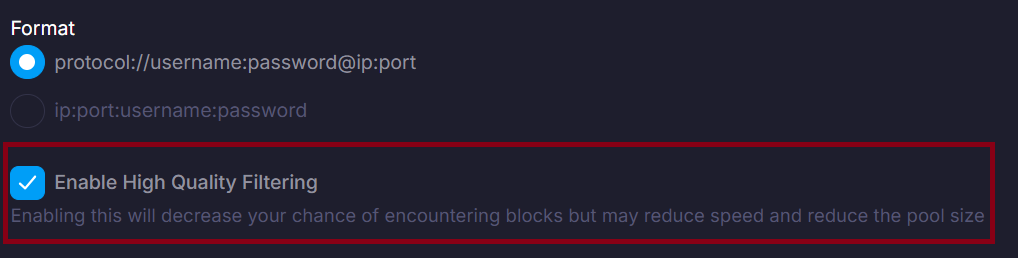
How Proxying Helps with Amazon and eBay
Proxying provides multiple proxy solutions designed specifically for automation, scraping, and account management on platforms like Amazon and eBay. Businesses and developers can use rotating residential proxies to distribute requests across large IP pools, while static residential IPs help maintain stable sessions for account-based workflows.
Because of this flexibility, Proxying is suitable for a wide range of use cases, including e-commerce intelligence, marketplace monitoring, seller analytics, automation systems, and region-specific testing. Whether a business needs localized product data or stable account sessions, reliable proxy infrastructure plays a major role in maintaining efficient marketplace access.
Amazon Proxy Challenges
Amazon has one of the most advanced anti-bot and anti-scraping systems in the e-commerce industry. The platform actively monitors traffic behavior and uses multiple detection layers to identify suspicious activity. Users commonly encounter challenges such as dynamic page rendering, aggressive rate limiting, CAPTCHA systems, browser fingerprinting, JavaScript validation, and session-based protection mechanisms.
To improve scraping success rates on Amazon, businesses typically rely on high-quality residential proxies combined with careful automation practices. Rotating IP addresses regularly, using browser automation carefully, limiting concurrency levels, and caching previously collected data can significantly reduce detection risks. Successful Amazon scraping often depends on balancing request volume with realistic browsing behavior.
eBay Proxy Challenges
Although eBay is generally less aggressive than Amazon, it still monitors suspicious traffic patterns and automated behavior closely. Users frequently encounter login verification prompts, temporary IP restrictions, automated traffic warnings, and request throttling when scraping too aggressively or managing multiple accounts from the same connection.
For stable eBay workflows, businesses usually maintain consistent sessions for account management and avoid excessively rapid crawling across categories or listings. Rotating proxies during scraping activities while keeping automation speeds realistic can help reduce security triggers and maintain reliable access over longer periods.
Choosing the Right Proxy Setup
The ideal proxy configuration depends entirely on the specific marketplace workflow and business objective. Different tasks require different balances between anonymity, session stability, and request scalability.
For Price Monitoring
Price monitoring workflows typically perform best with rotating residential proxies combined with moderate request speeds and automated retry systems. This setup helps distribute requests naturally while minimizing rate limits and temporary bans during continuous data collection.
For Multi-Account Management
Managing multiple seller or buyer accounts usually requires static residential proxies with one dedicated IP address per account. Consistent browser fingerprints and stable sessions help reduce the likelihood of account linking or suspicious login activity.
For Large-Scale Scraping
Large-scale scraping operations often require large residential proxy pools, automatic IP rotation, headless browser integration, and CAPTCHA-handling mechanisms. Combining these components allows businesses to collect high volumes of marketplace data more efficiently while reducing detection risks.
For Ad Verification
Ad verification workflows commonly rely on geo-targeted residential proxies, sticky sessions, and browser-based automation tools. This setup allows businesses to verify how sponsored products and advertisements appear in different countries or regions.
Troubleshooting Common Proxy Issues
Even with high-quality proxies, users may occasionally experience technical or detection-related issues while interacting with Amazon or eBay. Understanding common problems and their causes can help improve overall scraping reliability.
Frequent CAPTCHA Challenges
Frequent CAPTCHA requests are usually caused by overly aggressive scraping speeds, low-quality proxies, or reused browser fingerprints. Reducing request frequency, upgrading to better residential proxies, and rotating browser headers or sessions can often minimize these challenges significantly.
HTTP 403 Errors
An HTTP 403 error usually indicates that access has been blocked by the target platform. This often happens when using low-trust IPs or repetitive request patterns. Rotating IP addresses more frequently, switching from datacenter to residential proxies, adding realistic browser headers, and managing cookies properly can help restore access.
Slow Connection Speeds
Slow proxy performance may result from overloaded proxy servers, distant geographic routing, or limited bandwidth plans. Using geographically closer proxy locations, upgrading proxy bandwidth, and reducing concurrent request volumes can improve overall speed and stability.
Proxy Authentication Errors
Authentication issues are commonly caused by incorrect credentials, expired subscriptions, or improperly formatted proxy configurations. Users should always verify the username, password, proxy host, port number, and protocol compatibility when troubleshooting connection problems.
Conclusion
Amazon and eBay provide enormous opportunities for businesses, developers, researchers, and sellers looking to collect marketplace intelligence, monitor pricing trends, manage multiple accounts, or analyze competitor activity. Proxies play a critical role in maintaining anonymous and reliable access while reducing the risks associated with automation and large-scale scraping.
Choosing the right proxy type is essential for long-term success. Residential proxies offer strong anonymity and lower detection rates, rotating proxies help distribute scraping traffic efficiently, and static residential proxies provide stable sessions for account management.